Seongnam · Gyeonggi-do, Korea
Dr. Donghoon Advanced Limb Lengthening & Reconstruction Institute
Dr. Donghoon (DALRI), made simple
Dr. Donghoon Advanced Limb Lengthening & Reconstruction Institute is a specialist hospital in Seongnam, Gyeonggi-do, South Korea, focused on limb lengthening · lengthening methods · deformity correction · re-operation. This page collects 16 procedures and 1 doctor profiles, adapted from the hospital's official material, plus its address (Superstar Tower 3-5F, 10 Wiryeseoil-ro, Sujeong-gu, Seongnam-si, Gyeonggi-do, South Korea) and reservation line +82-31-626-0011.
Data last updated:
16
procedures
40
videos
1
doctors
Contact & location▾
Browse by treatment area
Tap an area to jump to every procedure in that group.
Before & After gallery
The full archive of real patient radiographs, in six plain-language groups
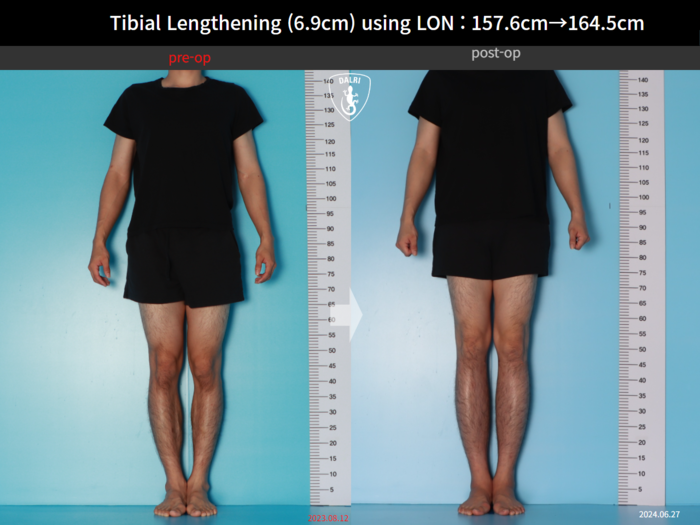
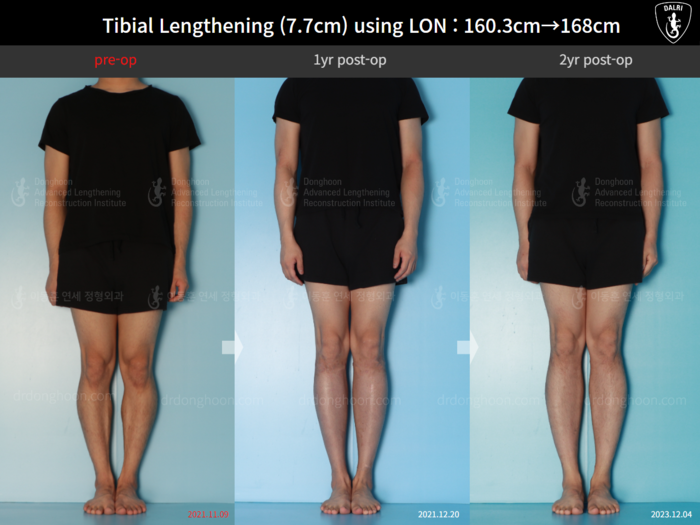
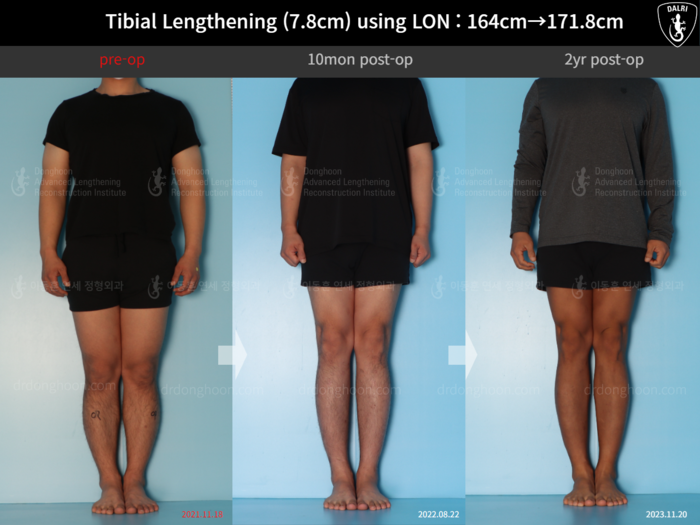 Height increase (limb lengthening)555Tibial and femoral lengthening with LON and PRECICE, including cases combined with deformity correction and revisions of surgery done elsewhere.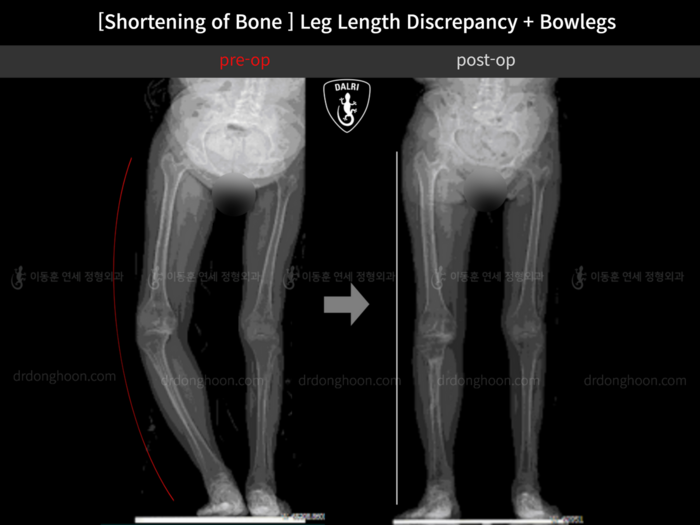
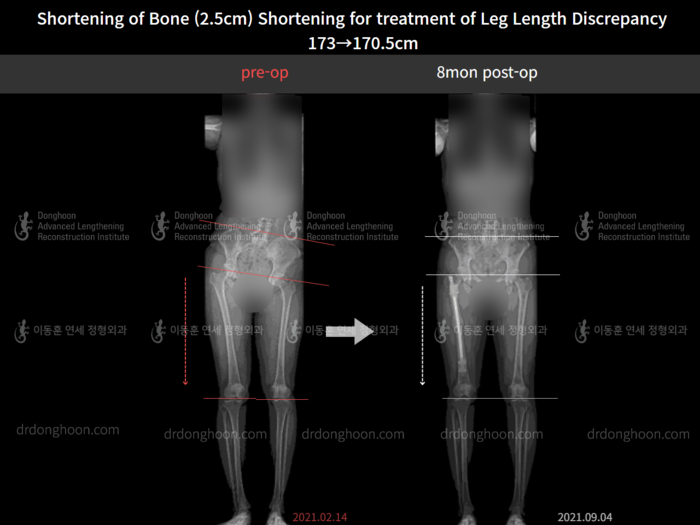
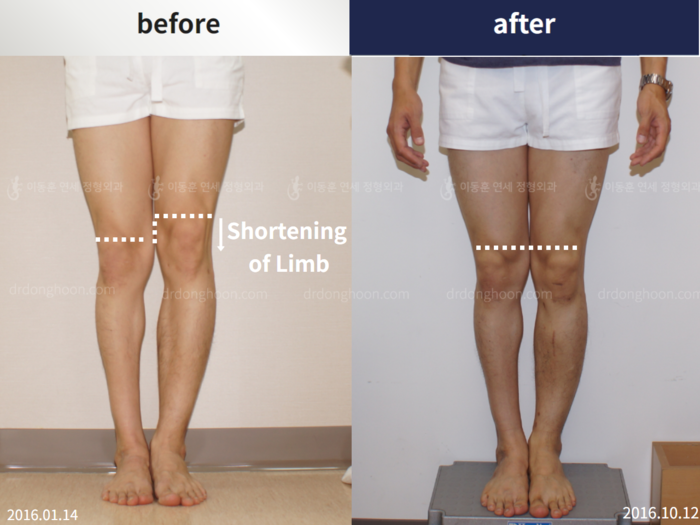 Leg length discrepancy151Correcting unequal leg length in children, adolescents and adults by lengthening the short side or adjusting the long one.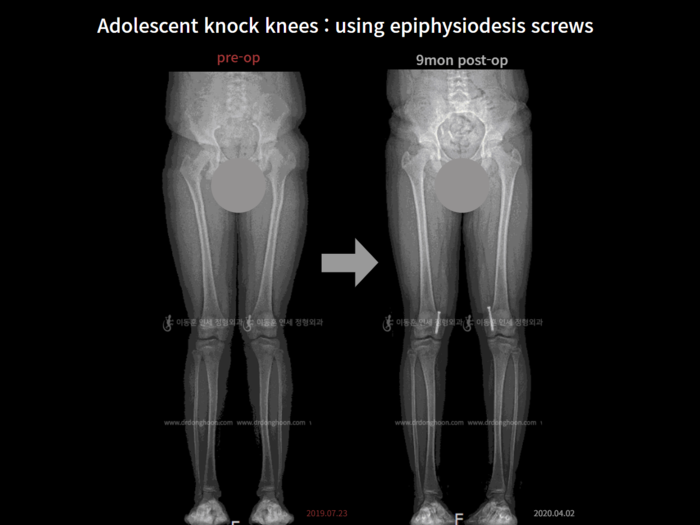
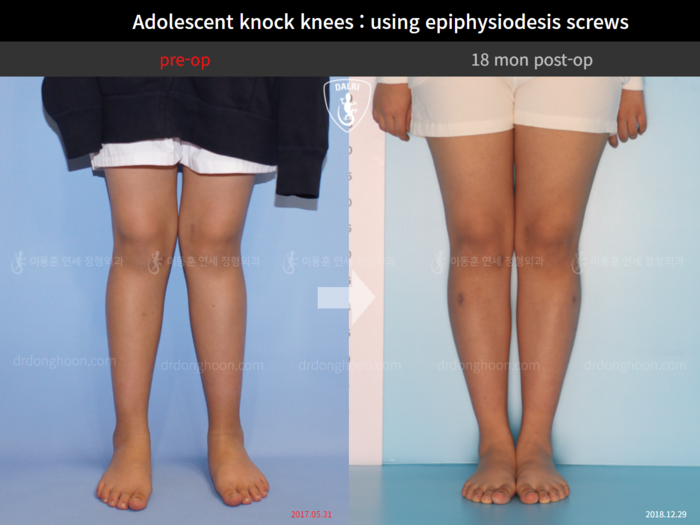
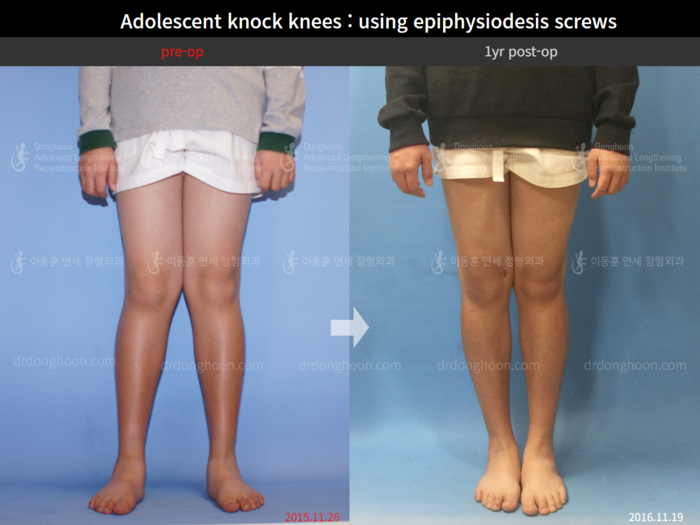 Bowlegs, knock knees & knee osteoarthritis450Realigning the mechanical axis for bowlegs, knock knees and medial knee osteoarthritis caused by malalignment.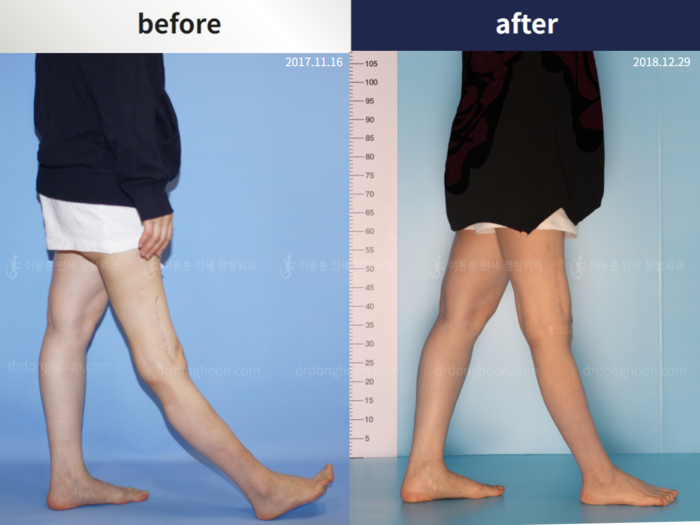
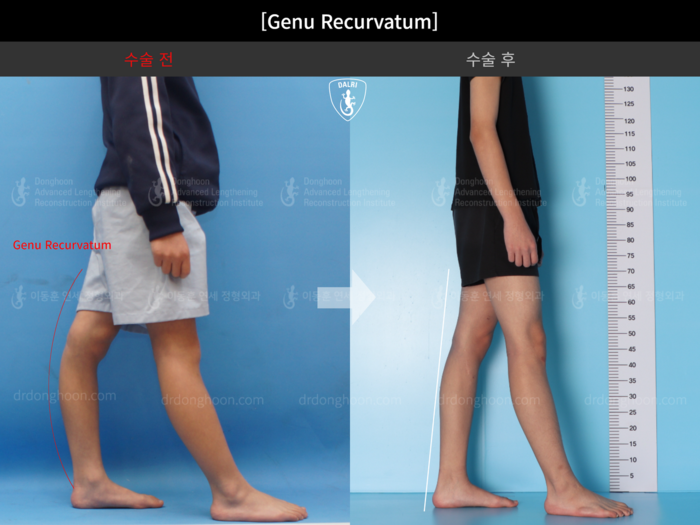
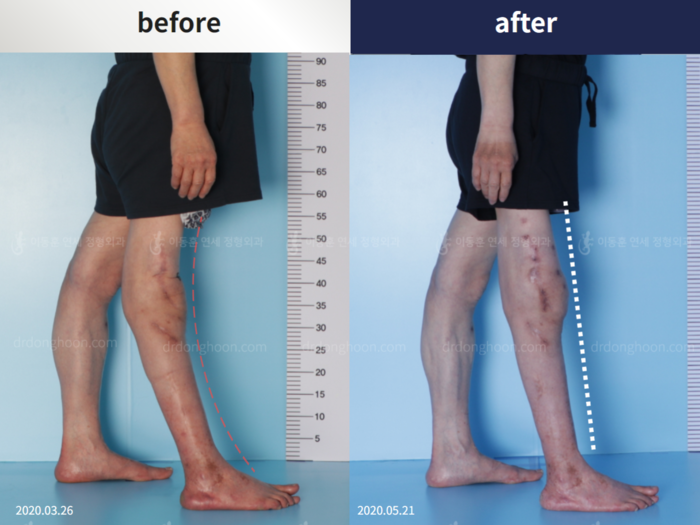 Complex & post-trauma deformity224Multiplanar deformity, malunion after fracture or infection, flexion contracture, genu recurvatum and revision correction.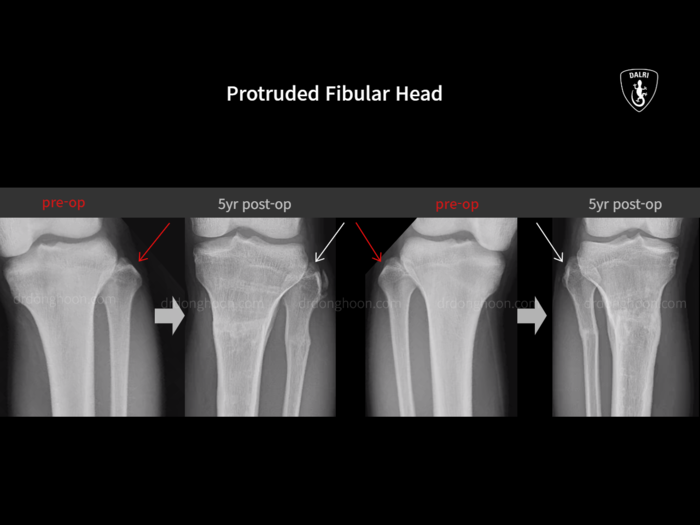
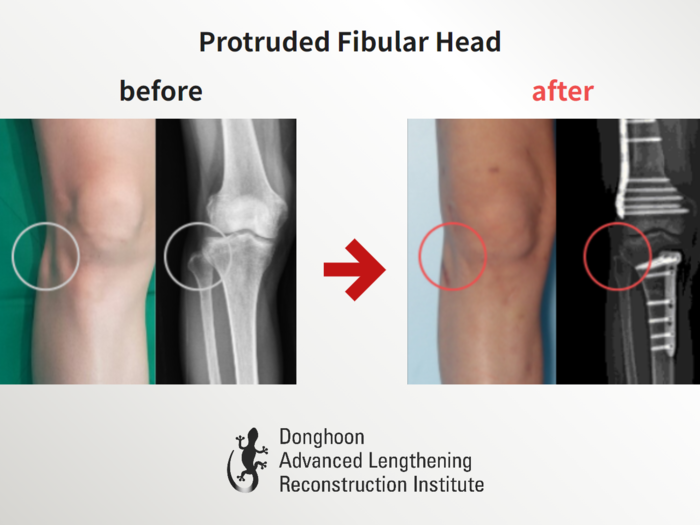
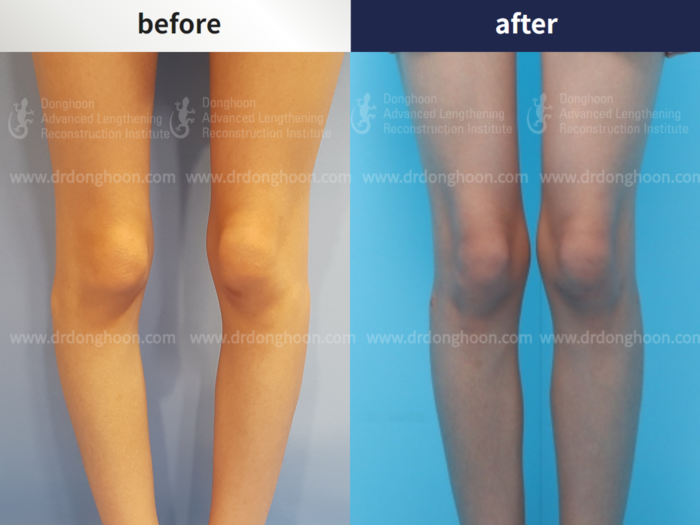 Congenital & paediatric conditions122Congenital conditions in children and adults, clubfoot, recurrent patella dislocation and protruded fibular head.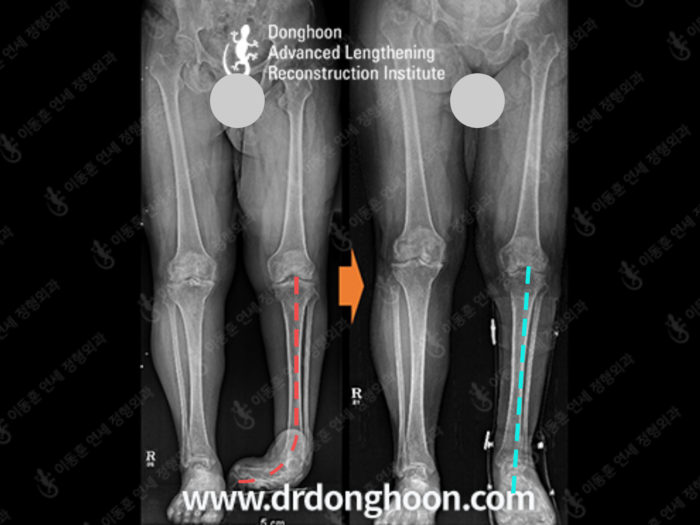
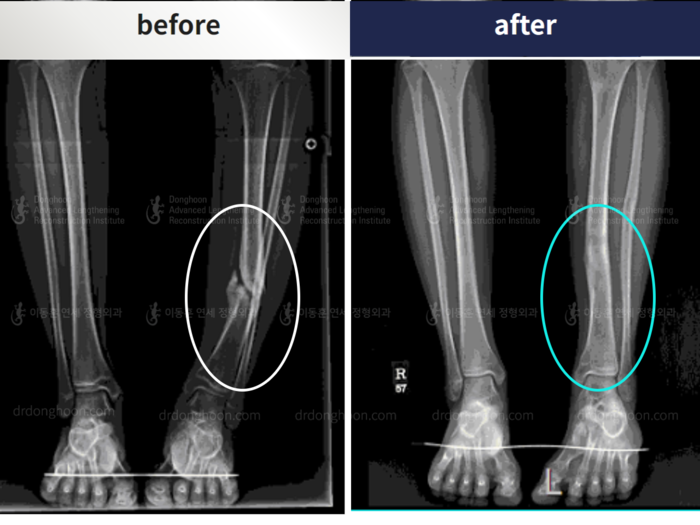
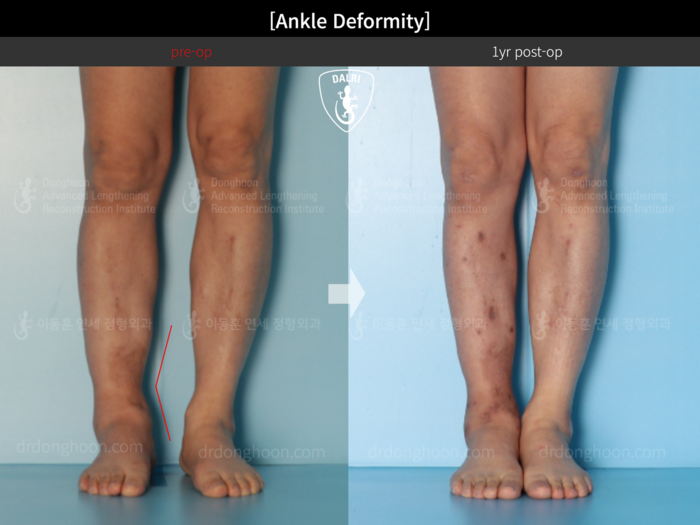 Arm, foot & ankle71Arm lengthening, brachymetatarsia (short metatarsal) lengthening and foot & ankle deformity correction.
Case photos show individual results. Outcomes vary with anatomy and aftercare.
Videos
Reviews and guides from the hospital's official channel — swipe for more
Clip summaries
Read the key takeaways from each clip without watching it end to end
Doing this before limb lengthening surgery will save your joints
Preparing the joints before lengthening — especially building knee and ankle range of motion — is what protects joint function through the whole distraction phase.
Key points
- Good pre-op range of motion is the buffer when muscles are stretched
- The ankle and knee are the two joints most affected
- Start preparing at least several weeks before the operation
Questions from this clip
Pick a question to jump the player to the relevant moment
Use arrow up/down to move between questions, Enter to expand
0:11What does this clip say about good pre-op range of motion is the buffer when muscles are stretched?
Good pre-op range of motion is the buffer when muscles are stretched — Preparing the joints before lengthening — especially building knee and ankle range of motion — is what protects joint function through the whole distraction phase.
0:22What details are covered on the ankle and knee are the two joints most affected?
The ankle and knee are the two joints most affected — Preparing the joints before lengthening — especially building knee and ankle range of motion — is what protects joint function through the whole distraction phase.
0:32Why does start preparing at least several weeks before the operation matter?
Start preparing at least several weeks before the operation — Preparing the joints before lengthening — especially building knee and ankle range of motion — is what protects joint function through the whole distraction phase.
Is bowleg surgery done for appearance actually bad for you?
Is bowleg surgery for appearance bad for you? Done correctly, straightening the axis also reduces load on the knee, so the cosmetic and functional goals point in the same direction.
Key points
- Straightening the axis reduces cumulative load on the inner knee
- Angles must be measured on standing full-leg X-rays, not judged by eye
- Overcorrection tilts the axis the other way, so planning must be precise
Questions from this clip
Pick a question to jump the player to the relevant moment
Use arrow up/down to move between questions, Enter to expand
0:10What does this clip say about straightening the axis reduces cumulative load on the inner knee?
Straightening the axis reduces cumulative load on the inner knee — Is bowleg surgery for appearance bad for you? Done correctly, straightening the axis also reduces load on the knee, so the cosmetic and functional goals point in the same direction.
0:19What details are covered on angles must be measured on standing full-leg X-rays, not judged by eye?
Angles must be measured on standing full-leg X-rays, not judged by eye — Is bowleg surgery for appearance bad for you? Done correctly, straightening the axis also reduces load on the knee, so the cosmetic and functional goals point in the same direction.
0:29Why does overcorrection tilts the axis the other way, so planning must be precise matter?
Overcorrection tilts the axis the other way, so planning must be precise — Is bowleg surgery for appearance bad for you? Done correctly, straightening the axis also reduces load on the knee, so the cosmetic and functional goals point in the same direction.
Limb lengthening over 40? The real limits of height surgery (Dr. Lee EP.04)
Can you still have limb lengthening after 40? Chronological age alone does not decide it — bone quality, the state of the knee and hip joints, existing medical conditions and the ability to commit to months of demanding rehabilitation all matter.
Key points
- Older bone consolidates more slowly, so the daily rate is reduced and total time increases
- Knees and hips are assessed first, because lengthening adds load to those joints
- Clear arthritis or osteoporosis can rule the surgery out
Questions from this clip
Pick a question to jump the player to the relevant moment
Use arrow up/down to move between questions, Enter to expand
1:59What does this clip say about older bone consolidates more slowly, so the daily rate is reduced and total time increases?
Older bone consolidates more slowly, so the daily rate is reduced and total time increases — Can you still have limb lengthening after 40? Chronological age alone does not decide it — bone quality, the state of the knee and hip joints, existing medical conditions and the ability to commit to months of demanding rehabilitation all matter.
3:57What details are covered on knees and hips are assessed first, because lengthening adds load to those joints?
Knees and hips are assessed first, because lengthening adds load to those joints — Can you still have limb lengthening after 40? Chronological age alone does not decide it — bone quality, the state of the knee and hip joints, existing medical conditions and the ability to commit to months of demanding rehabilitation all matter.
5:56Why does clear arthritis or osteoporosis can rule the surgery out matter?
Clear arthritis or osteoporosis can rule the surgery out — Can you still have limb lengthening after 40? Chronological age alone does not decide it — bone quality, the state of the knee and hip joints, existing medical conditions and the ability to commit to months of demanding rehabilitation all matter.
Why pin-site infection in LON surgery is extremely dangerous
Why pin-site infection in LON surgery is more dangerous than it looks: bacteria can track along the pin into the bone canal and onto the internal nail, which may force hardware removal and stop the lengthening mid-course.
Key points
- Pins crossing the skin are a direct route for bacteria into the bone
- Daily pin-site cleaning exactly as the nursing team teaches is the main defence
- Redness, throbbing pain or discharge means seeing the surgeon immediately, not waiting it out
Questions from this clip
Pick a question to jump the player to the relevant moment
Use arrow up/down to move between questions, Enter to expand
0:15What does this clip say about pins crossing the skin are a direct route for bacteria into the bone?
Pins crossing the skin are a direct route for bacteria into the bone — Why pin-site infection in LON surgery is more dangerous than it looks: bacteria can track along the pin into the bone canal and onto the internal nail, which may force hardware removal and stop the lengthening mid-course.
0:30What details are covered on daily pin-site cleaning exactly as the nursing team teaches is the main defence?
Daily pin-site cleaning exactly as the nursing team teaches is the main defence — Why pin-site infection in LON surgery is more dangerous than it looks: bacteria can track along the pin into the bone canal and onto the internal nail, which may force hardware removal and stop the lengthening mid-course.
0:44Why does redness, throbbing pain or discharge means seeing the surgeon immediately, not waiting it out matter?
Redness, throbbing pain or discharge means seeing the surgeon immediately, not waiting it out — Why pin-site infection in LON surgery is more dangerous than it looks: bacteria can track along the pin into the bone canal and onto the internal nail, which may force hardware removal and stop the lengthening mid-course.
Why buy an EOS scanner even large hospitals skip
Why the hospital invested in an EOS scanner: it images the whole body standing at low radiation dose, so leg axis and length difference can be measured far more accurately than with segmental X-rays.
Key points
- Standing images show the true weight-bearing axis of both legs
- Lower dose than conventional X-ray, suited to repeated follow-up
- Accurate measurement is the basis of any realignment surgical plan
Questions from this clip
Pick a question to jump the player to the relevant moment
Use arrow up/down to move between questions, Enter to expand
1:29What does this clip say about standing images show the true weight-bearing axis of both legs?
Standing images show the true weight-bearing axis of both legs — Why the hospital invested in an EOS scanner: it images the whole body standing at low radiation dose, so leg axis and length difference can be measured far more accurately than with segmental X-rays.
2:59What details are covered on lower dose than conventional X-ray, suited to repeated follow-up?
Lower dose than conventional X-ray, suited to repeated follow-up — Why the hospital invested in an EOS scanner: it images the whole body standing at low radiation dose, so leg axis and length difference can be measured far more accurately than with segmental X-rays.
4:28Why does accurate measurement is the basis of any realignment surgical plan matter?
Accurate measurement is the basis of any realignment surgical plan — Why the hospital invested in an EOS scanner: it images the whole body standing at low radiation dose, so leg axis and length difference can be measured far more accurately than with segmental X-rays.
Femur lengthening: LON vs PRECICE — which is safer?
A comparison of the two main femur lengthening routes — LON, which combines an external frame with an internal nail, and the fully internal PRECICE nail — in terms of infection risk, comfort during recovery and the limits of each method.
Key points
- LON uses pins that pass through the skin, so pin-site infection is a risk for as long as the frame is worn
- PRECICE is fully internal with no open wound left in place, so it is more comfortable and easier to keep clean
- The choice depends on the target length, bone quality, budget and how long you can stay in Korea
Questions from this clip
Pick a question to jump the player to the relevant moment
Use arrow up/down to move between questions, Enter to expand
0:12What does this clip say about lON uses pins that pass through the skin, so pin-site infection is a risk for as long as the frame is worn?
LON uses pins that pass through the skin, so pin-site infection is a risk for as long as the frame is worn — A comparison of the two main femur lengthening routes — LON, which combines an external frame with an internal nail, and the fully internal PRECICE nail — in terms of infection risk, comfort during recovery and the limits of each method.
0:23What details are covered on pRECICE is fully internal with no open wound left in place, so it is more comfortable and easier to keep clean?
PRECICE is fully internal with no open wound left in place, so it is more comfortable and easier to keep clean — A comparison of the two main femur lengthening routes — LON, which combines an external frame with an internal nail, and the fully internal PRECICE nail — in terms of infection risk, comfort during recovery and the limits of each method.
0:35Why does the choice depends on the target length, bone quality, budget and how long you can stay in Korea matter?
The choice depends on the target length, bone quality, budget and how long you can stay in Korea — A comparison of the two main femur lengthening routes — LON, which combines an external frame with an internal nail, and the fully internal PRECICE nail — in terms of infection risk, comfort during recovery and the limits of each method.
Why straight legs become bowed with age (Dr. Lee EP.03)
Why legs that were straight start to look bowed with age: the bone itself does not bend — cartilage wears down on the inner side of the knee and tilts the mechanical axis inward.
Key points
- Inner-compartment cartilage wear shifts the leg axis
- A tilted axis loads the inner side further — a cycle that accelerates arthritis
- Realignment osteotomy redistributes the load and can slow the degeneration
Questions from this clip
Pick a question to jump the player to the relevant moment
Use arrow up/down to move between questions, Enter to expand
2:26What does this clip say about inner-compartment cartilage wear shifts the leg axis?
Inner-compartment cartilage wear shifts the leg axis — Why legs that were straight start to look bowed with age: the bone itself does not bend — cartilage wears down on the inner side of the knee and tilts the mechanical axis inward.
4:51What details are covered on a tilted axis loads the inner side further — a cycle that accelerates arthritis?
A tilted axis loads the inner side further — a cycle that accelerates arthritis — Why legs that were straight start to look bowed with age: the bone itself does not bend — cartilage wears down on the inner side of the knee and tilts the mechanical axis inward.
7:17Why does realignment osteotomy redistributes the load and can slow the degeneration matter?
Realignment osteotomy redistributes the load and can slow the degeneration — Why legs that were straight start to look bowed with age: the bone itself does not bend — cartilage wears down on the inner side of the knee and tilts the mechanical axis inward.
The evolution of limb lengthening, from Ilizarov to PRECICE
The evolution of limb lengthening: from the Ilizarov ring fixator, through LON which shortens the time in a frame, to PRECICE — an internal nail lengthened by an external magnetic controller.
Key points
- Ilizarov proved the principle of gradual distraction letting new bone form
- LON greatly reduces the time an external frame must be worn
- PRECICE lengthens magnetically from outside, giving precise control of the daily rate
Questions from this clip
Pick a question to jump the player to the relevant moment
Use arrow up/down to move between questions, Enter to expand
0:09What does this clip say about ilizarov proved the principle of gradual distraction letting new bone form?
Ilizarov proved the principle of gradual distraction letting new bone form — The evolution of limb lengthening: from the Ilizarov ring fixator, through LON which shortens the time in a frame, to PRECICE — an internal nail lengthened by an external magnetic controller.
0:19What details are covered on lON greatly reduces the time an external frame must be worn?
LON greatly reduces the time an external frame must be worn — The evolution of limb lengthening: from the Ilizarov ring fixator, through LON which shortens the time in a frame, to PRECICE — an internal nail lengthened by an external magnetic controller.
0:28Why does pRECICE lengthens magnetically from outside, giving precise control of the daily rate matter?
PRECICE lengthens magnetically from outside, giving precise control of the daily rate — The evolution of limb lengthening: from the Ilizarov ring fixator, through LON which shortens the time in a frame, to PRECICE — an internal nail lengthened by an external magnetic controller.
The best age and timing for height surgery
When to time height surgery: wait until the growth plates have closed and natural growth has stopped, and plan the recovery window so it does not collide with study or major work commitments.
Key points
- Growth plate closure must be confirmed on X-ray first
- Block out several continuous months for the lengthening and consolidation phases
- Operating too early, while bone is still growing, can throw the plan off
Questions from this clip
Pick a question to jump the player to the relevant moment
Use arrow up/down to move between questions, Enter to expand
0:09What does this clip say about growth plate closure must be confirmed on X-ray first?
Growth plate closure must be confirmed on X-ray first — When to time height surgery: wait until the growth plates have closed and natural growth has stopped, and plan the recovery window so it does not collide with study or major work commitments.
0:19What details are covered on block out several continuous months for the lengthening and consolidation phases?
Block out several continuous months for the lengthening and consolidation phases — When to time height surgery: wait until the growth plates have closed and natural growth has stopped, and plan the recovery window so it does not collide with study or major work commitments.
0:28Why does operating too early, while bone is still growing, can throw the plan off matter?
Operating too early, while bone is still growing, can throw the plan off — When to time height surgery: wait until the growth plates have closed and natural growth has stopped, and plan the recovery window so it does not collide with study or major work commitments.
How the operating room is kept fully sterile
A look at operating-room sterility — air filtration, instrument preparation and team discipline — because bone surgery that leaves metal inside the body carries a high cost if infection occurs.
Key points
- Implant surgery demands a higher sterility standard than usual
- Air handling and instrument preparation are the core of infection prevention
- Team discipline in theatre matters as much as the equipment
Questions from this clip
Pick a question to jump the player to the relevant moment
Use arrow up/down to move between questions, Enter to expand
0:06What does this clip say about implant surgery demands a higher sterility standard than usual?
Implant surgery demands a higher sterility standard than usual — A look at operating-room sterility — air filtration, instrument preparation and team discipline — because bone surgery that leaves metal inside the body carries a high cost if infection occurs.
0:12What details are covered on air handling and instrument preparation are the core of infection prevention?
Air handling and instrument preparation are the core of infection prevention — A look at operating-room sterility — air filtration, instrument preparation and team discipline — because bone surgery that leaves metal inside the body carries a high cost if infection occurs.
0:18Why does team discipline in theatre matters as much as the equipment matter?
Team discipline in theatre matters as much as the equipment — A look at operating-room sterility — air filtration, instrument preparation and team discipline — because bone surgery that leaves metal inside the body carries a high cost if infection occurs.
Should you keep taking painkillers when it no longer hurts?
Why painkillers are taken on schedule even when it does not hurt much: keeping pain consistently low is what allows the full physiotherapy plan to happen — and rehabilitation is what decides the outcome.
Key points
- Pain controlled ahead of time is easier to manage than pain chased after it starts
- Pain that stops movement means missed physiotherapy and stiffer joints
- Adjust the dose only as the medical team directs; do not stop on your own
Questions from this clip
Pick a question to jump the player to the relevant moment
Use arrow up/down to move between questions, Enter to expand
0:07What does this clip say about pain controlled ahead of time is easier to manage than pain chased after it starts?
Pain controlled ahead of time is easier to manage than pain chased after it starts — Why painkillers are taken on schedule even when it does not hurt much: keeping pain consistently low is what allows the full physiotherapy plan to happen — and rehabilitation is what decides the outcome.
0:15What details are covered on pain that stops movement means missed physiotherapy and stiffer joints?
Pain that stops movement means missed physiotherapy and stiffer joints — Why painkillers are taken on schedule even when it does not hurt much: keeping pain consistently low is what allows the full physiotherapy plan to happen — and rehabilitation is what decides the outcome.
0:22Why does adjust the dose only as the medical team directs; do not stop on your own matter?
Adjust the dose only as the medical team directs; do not stop on your own — Why painkillers are taken on schedule even when it does not hurt much: keeping pain consistently low is what allows the full physiotherapy plan to happen — and rehabilitation is what decides the outcome.
Thinking about LON for thigh lengthening? Read this first
What to know before choosing LON for the thigh: the femur is surrounded by thick muscle, so an external frame there affects knee bending and walking more than it does at the tibia.
Key points
- A thigh frame interferes with knee bending and sitting more than a tibial one
- Strict knee physiotherapy is needed to prevent the knee from stiffening
- Patients who cannot tolerate that are usually better suited to an internal nail
Questions from this clip
Pick a question to jump the player to the relevant moment
Use arrow up/down to move between questions, Enter to expand
1:18What does this clip say about a thigh frame interferes with knee bending and sitting more than a tibial one?
A thigh frame interferes with knee bending and sitting more than a tibial one — What to know before choosing LON for the thigh: the femur is surrounded by thick muscle, so an external frame there affects knee bending and walking more than it does at the tibia.
2:36What details are covered on strict knee physiotherapy is needed to prevent the knee from stiffening?
Strict knee physiotherapy is needed to prevent the knee from stiffening — What to know before choosing LON for the thigh: the femur is surrounded by thick muscle, so an external frame there affects knee bending and walking more than it does at the tibia.
3:53Why does patients who cannot tolerate that are usually better suited to an internal nail matter?
Patients who cannot tolerate that are usually better suited to an internal nail — What to know before choosing LON for the thigh: the femur is surrounded by thick muscle, so an external frame there affects knee bending and walking more than it does at the tibia.
7 cm of leg lengthening — the hard reality (Dr. Lee EP.01)
A blunt look at aiming for 7 cm: the trade-off is time, pain and rehabilitation discipline, and muscles and nerves do not always stretch as readily as bone.
Key points
- The more you lengthen, the higher the risk of stiff joints and contracture — daily stretching is compulsory
- Splitting the gain across two segments is often safer than maxing out one
- A safe target comes from your actual assessment, not the number you wish for
Questions from this clip
Pick a question to jump the player to the relevant moment
Use arrow up/down to move between questions, Enter to expand
1:22What does this clip say about the more you lengthen, the higher the risk of stiff joints and contracture — daily stretching is compulsory?
The more you lengthen, the higher the risk of stiff joints and contracture — daily stretching is compulsory — A blunt look at aiming for 7 cm: the trade-off is time, pain and rehabilitation discipline, and muscles and nerves do not always stretch as readily as bone.
2:43What details are covered on splitting the gain across two segments is often safer than maxing out one?
Splitting the gain across two segments is often safer than maxing out one — A blunt look at aiming for 7 cm: the trade-off is time, pain and rehabilitation discipline, and muscles and nerves do not always stretch as readily as bone.
4:05Why does a safe target comes from your actual assessment, not the number you wish for matter?
A safe target comes from your actual assessment, not the number you wish for — A blunt look at aiming for 7 cm: the trade-off is time, pain and rehabilitation discipline, and muscles and nerves do not always stretch as readily as bone.
Essential strength exercises before lengthening and bowleg correction (pre-op prep 3)
Strength work to complete before lengthening or bowleg correction: stronger thigh and hip muscles mean getting up and walking sooner, and less muscle loss through recovery.
Key points
- Quadriceps and hip muscles are the groups to prepare most
- The stronger you are pre-op, the faster and less painful the early recovery
- Train with guidance so you do not get injured before surgery day
Questions from this clip
Pick a question to jump the player to the relevant moment
Use arrow up/down to move between questions, Enter to expand
0:32What does this clip say about quadriceps and hip muscles are the groups to prepare most?
Quadriceps and hip muscles are the groups to prepare most — Strength work to complete before lengthening or bowleg correction: stronger thigh and hip muscles mean getting up and walking sooner, and less muscle loss through recovery.
1:04What details are covered on the stronger you are pre-op, the faster and less painful the early recovery?
The stronger you are pre-op, the faster and less painful the early recovery — Strength work to complete before lengthening or bowleg correction: stronger thigh and hip muscles mean getting up and walking sooner, and less muscle loss through recovery.
1:35Why does train with guidance so you do not get injured before surgery day matter?
Train with guidance so you do not get injured before surgery day — Strength work to complete before lengthening or bowleg correction: stronger thigh and hip muscles mean getting up and walking sooner, and less muscle loss through recovery.
Three stretches before tibia lengthening (pre-op prep 1)
Three stretches to do before tibia lengthening, aimed at calf and Achilles flexibility so the ankle is less likely to stiffen and walking stays easier through the lengthening phase.
Key points
- Calf and Achilles flexibility is the key factor in tibia lengthening
- Start stretching weeks in advance, not after surgery
- Consistent daily work beats one heavy session
Questions from this clip
Pick a question to jump the player to the relevant moment
Use arrow up/down to move between questions, Enter to expand
0:21What does this clip say about calf and Achilles flexibility is the key factor in tibia lengthening?
Calf and Achilles flexibility is the key factor in tibia lengthening — Three stretches to do before tibia lengthening, aimed at calf and Achilles flexibility so the ankle is less likely to stiffen and walking stays easier through the lengthening phase.
0:41What details are covered on start stretching weeks in advance, not after surgery?
Start stretching weeks in advance, not after surgery — Three stretches to do before tibia lengthening, aimed at calf and Achilles flexibility so the ankle is less likely to stiffen and walking stays easier through the lengthening phase.
1:02Why does consistent daily work beats one heavy session matter?
Consistent daily work beats one heavy session — Three stretches to do before tibia lengthening, aimed at calf and Achilles flexibility so the ankle is less likely to stiffen and walking stays easier through the lengthening phase.
Can physical therapy fix knock knees? An orthopedic surgeon explains
An orthopedic surgeon explains that physiotherapy cannot reshape deformed bone — it only strengthens the muscles around the joint. Genuine correction of knock knees requires realignment surgery.
Key points
- Physiotherapy helps strength and pain but does not change bone angles
- In growing children, guided growth is a less invasive option
- In adults, osteotomy is the only way to truly change the angle
Questions from this clip
Pick a question to jump the player to the relevant moment
Use arrow up/down to move between questions, Enter to expand
2:01What does this clip say about physiotherapy helps strength and pain but does not change bone angles?
Physiotherapy helps strength and pain but does not change bone angles — An orthopedic surgeon explains that physiotherapy cannot reshape deformed bone — it only strengthens the muscles around the joint. Genuine correction of knock knees requires realignment surgery.
4:03What details are covered on in growing children, guided growth is a less invasive option?
In growing children, guided growth is a less invasive option — An orthopedic surgeon explains that physiotherapy cannot reshape deformed bone — it only strengthens the muscles around the joint. Genuine correction of knock knees requires realignment surgery.
6:04Why does in adults, osteotomy is the only way to truly change the angle matter?
In adults, osteotomy is the only way to truly change the angle — An orthopedic surgeon explains that physiotherapy cannot reshape deformed bone — it only strengthens the muscles around the joint. Genuine correction of knock knees requires realignment surgery.
All procedures
16 procedures found
16 procedures found
Limb lengthening
5- Stature lengthening (leg lengthening)Stature lengthening uses distraction osteogenesis: the bone is cut and then separated roughly 1 mm a day so new bone forms in the gap. It can be done on the tibia or the femur, typically 6-7 cm per round, with 5-7 months before a full return to normal life.
- Arm lengthening (humerus)Humerus lengthening is used both for arm-length discrepancy and for cosmetic proportion. The conventional route uses a mono-fixator, which allows 8-10 cm and lets patients use the arm for daily tasks. The institute now favours the internal PRECICE nail: smaller scars, less pain and no pin-site infection.
- Leg length discrepancyLeg length discrepancy can follow childhood growth-plate injury, infection, bone tumour, congenital conditions or previous bone surgery. Treatment lengthens the short side to match, correcting any accompanying angular or rotational deformity in the same plan so alignment and gait rebalance together.
- Leg lengthening with deformity correctionMany stature-lengthening patients also have bowlegs, knock-knees or torsion. The institute plans lengthening and realignment together, so height and straight alignment are achieved in one treatment rather than a second operation later.
- Brachydactyly & brachymetatarsiaBrachydactyly most often affects the metacarpals (especially the 2nd and 5th) and metatarsals (especially the 1st and 4th). Causes include childhood growth-plate damage from infection or tumour, genetic disorders, and — most commonly — no identifiable cause. Except in severe cases it does not impair function, so surgery is usually cosmetic.
Lengthening methods
4- LON (Lengthening Over Nail)In LON an intramedullary nail is inserted together with an external fixator at the first operation. Once the target length is reached, a second operation locks the nail and removes the external frame — cutting external-fixation time to roughly half that of classic Ilizarov.
- PRECICE / STRYDE internal lengthening nailPRECICE (Nuvasive, USA) is a fully implantable, magnetically driven lengthening nail — no external fixator at all. STRYDE works on the same mechanism but is designed to allow far more weight-bearing. Dr. Donghoon Lee was the first surgeon in Asia to perform PRECICE lengthening successfully and holds the largest single-surgeon case volume in Asia.
- LATN (Lengthening And Then Nailing)In LATN only the external fixator is applied at the first operation; after lengthening, a second operation inserts the nail and removes the frame. Compared with LON, bone forms faster and leg alignment can be corrected more precisely. Dr. Donghoon Lee was the first in Korea to perform LATN successfully, in 2010.
- External fixation (Ilizarov)The Ilizarov method uses an external frame throughout both the lengthening and consolidation phases. Even with LON and LATN available, it remains essential for complex deformity. The institute now pairs it with a computer-assisted correction system (Ortho-SUV, a Stewart platform), correcting multi-plane deformity in a single operation — the largest case volume of its kind in Korea.
Deformity correction
6- Bowleg correction with SADOBowlegs (genu varum) bow outward at the knee, and many patients have both angular and rotational deformity. Correcting the angle alone with a high tibial osteotomy can bring the knees together yet leave the overall alignment looking unnatural. Dr. Donghoon Lee therefore developed SADO — Simultaneous Angular and Derotational Osteotomy — correcting both in one operation.
- Knock-knee correction (genu valgum)Knock-knees (genu valgum) leave the knees touching but the ankles apart when standing. Causes include trauma, childhood rickets, hereditary multiple exostosis and idiopathic cases — more common in women and often linked to body weight. Braces and physiotherapy rarely help, because the deformity is in the bone.
- Rotational deformity (in-toeing & out-toeing)Rotational deformity lies in the rotational plane of the femur or tibia, producing in-toeing or out-toeing gait. It is often missed because plain radiographs do not show it. Treatment is a derotational osteotomy, which can be combined with angular correction using the SADO technique.
- Genu recurvatum (back-knee)Genu recurvatum is hyperextension of the knee on standing: the leg looks deformed in profile and knee loading rises over time. Causes include growth-plate injury, ligamentous laxity and post-traumatic bone deformity. Treatment realigns the bone in the sagittal plane.
- Osteotomy for knee arthritisWhen medial knee arthritis follows bowleg alignment, an osteotomy shifts load from the worn compartment to the healthier one, easing pain and deferring knee replacement. It suits younger patients whose joint still has usable cartilage.
- Complex & post-traumatic deformityComplex deformity combines angular, rotational and length problems at once, typically after trauma, bone infection or an incomplete previous operation. The institute uses the Ortho-SUV computer system with an external frame to correct multiple planes simultaneously and precisely.
Re-operation
1- Re-operation centreThe re-operation centre treats patients whose previous lengthening or realignment ran into trouble: nonunion, post-operative malalignment, infection, hardware failure or residual length difference. Each case is re-planned from scratch using prior imaging and the current state of the bone.
Dr. Donghoon (DALRI) FAQ
Where is Dr. Donghoon (DALRI) and which languages are supported?▾
Dr. Donghoon (DALRI) is at Superstar Tower 3-5F, 10 Wiryeseoil-ro, Sujeong-gu, Seongnam-si, Gyeonggi-do, South Korea. Consultations are handled in Korean, English and Thai, and the reservation line is +82-31-626-0011.
What does this hub cover?▾
16 procedures, 0 published before & after cases and 1 doctor profiles, grouped into treatment areas: Limb lengthening · Lengthening methods · Deformity correction · Re-operation.
How do I find a specific procedure?▾
Type a procedure or keyword into the search box above — Thai and English both work, e.g. V-Line, rhinoplasty or jaw. You can also filter by treatment area to see only the procedures in that group.
Are the before & after photos reliable?▾
All 0 cases are adapted from material Dr. Donghoon (DALRI) published officially, labelled with the treatment area and the follow-up interval where the hospital stated one. Individual results still vary with bone structure, skin quality, age and aftercare.
What are the doctors specialised in?▾
The 1 listed doctors cover plastic surgery, oral & maxillofacial surgery, anaesthesiology and dermatology. Each profile lists education, experience and specialties.
Can I book an appointment from this page?▾
No. This hub is an editorial reference, not a booking agent. For appointments or case assessment, contact Dr. Donghoon (DALRI) directly by phone or through its official website.
Quick answers from procedures & videos
34 questions taken from Dr. Donghoon (DALRI) procedure pages and clip notes — search and read them all here.
Stature lengthening (leg lengthening)How many centimetres can I gain?▾
One safe round is about 6-7 cm. Beyond that the hospital uses sequential or simultaneous femur + tibia programs; published cases range from 8 cm up to 12.5 cm, split across two operations.
Stature lengthening (leg lengthening)Stature lengthening (leg lengthening)Tibia or femur — what is the difference?▾
The femur usually heals faster and hides scars better; the tibia can give better proportion for some body types and the LON route is less expensive. The team measures your torso-to-leg ratio and recommends in…
Stature lengthening (leg lengthening)Stature lengthening (leg lengthening)How long must I stay in Korea?▾
You must stay in Korea for the whole lengthening and follow-up period; the international team arranges accommodation, interpretation and the physiotherapy schedule.
Stature lengthening (leg lengthening)LON (Lengthening Over Nail)How does LON differ from PRECICE?▾
LON uses an external frame during the lengthening phase, so there are pin scars and two operations, but it costs far less. PRECICE lengthens purely with an internal nail and no frame, at a much higher price because the…
LON (Lengthening Over Nail)PRECICE / STRYDE internal lengthening nailIs PRECICE lengthening painful?▾
Clearly less painful than frame-based methods because no pins pass through muscle. The usual complaints are muscle tightness and a dull ache during lengthening, managed with medication and daily physiotherapy.
PRECICE / STRYDE internal lengthening nailLATN (Lengthening And Then Nailing)Should I choose LON or LATN?▾
For general stature lengthening Dr. Lee now uses LON more often because it is simpler and cheaper. LATN is reserved for narrow canals, short bones or deformity severe enough that a nail cannot be inserted initially.
LATN (Lengthening And Then Nailing)External fixation (Ilizarov)Is Ilizarov still needed now that motorised nails exist?▾
Yes, in many situations — complex multi-plane deformity, previously infected bone, or bone that cannot take a nail — because the frame allows fine correction throughout treatment.
External fixation (Ilizarov)Arm lengthening (humerus)How much arm length can be gained?▾
The external mono-fixator can achieve 8-10 cm; with the internal PRECICE nail the limit depends on bone length and soft-tissue safety, and the team confirms a safe figure at consultation.
Arm lengthening (humerus)Leg length discrepancyHow much difference justifies surgery?▾
There is no fixed threshold; it depends on symptoms such as limping, back pain or joint pain, and on overall alignment. The team assesses radiographs and your actual gait before advising.
Leg length discrepancyLeg lengthening with deformity correctionDoes correcting bowlegs during lengthening cost extra?▾
It depends on the site and type: if the rotation lies within the segment already being lengthened there is no extra charge, but correcting the femur while lengthening the tibia does add cost. The hospital quotes this…
Leg lengthening with deformity correctionBrachydactyly & brachymetatarsiaWill I walk normally after toe lengthening?▾
Generally yes — most brachydactyly does not impair function, so surgery targets appearance and forefoot load balance, with prescribed post-operative physiotherapy.
Brachydactyly & brachymetatarsiaBowleg correction with SADOHow is SADO different from a standard HTO?▾
A high tibial osteotomy corrects the angle only; SADO corrects angle and rotation together, giving a more natural result when both are present, with internal fixation and no external frame.
Bowleg correction with SADO
Adapted from Dr. Donghoon (DALRI) official material
Stature lengthening programs
Basic lengthening (tibia or femur)
One segment only — tibia or femur — chosen by body proportion, recovery time and acceptable scarring.
6-7 cm · normal life in 5-7 months
Sequential lengthening (tibia then femur)
Lengthen one segment fully, then move straight to the other — balanced proportion in a shorter total time.
4 cm tibia + 4 cm femur · 5-7 months
Simultaneous lengthening (tibia + femur)
Both segments together — the fastest route to proportionate height, but it demands strict rehabilitation and is still split across two operations.
3 cm tibia + 3 cm femur · 3-5 months
Short-stay program (split into two rounds)
For patients who cannot take more than 2-3 months off: a modest gain completed in about 2 months, then a second round later — the internal hardware stays in place for round two.
3 cm in 2 months, then 3 cm more after 6 months
Maximum lengthening program
For the largest possible gain: one segment is lengthened to the safe maximum, with a further segment lengthened after full recovery.
Published cases up to 12.5 cm (6 cm femur + 6.5 cm tibia)
Surgery cost
Official published price list in Korean won, captured 2026-09-20
Femur lengthening (PRECICE)
117,420,000 KRW
IT band release, surgery fee, anaesthesia, 2 implants, 2 sets of analgesics & medication, 7 nights in a 4-bed room, 3 cryotherapy sessions, 1 rehab session, 1 ScarFix
Tibia lengthening (PRECICE)
131,760,000 KRW
Posterior release, surgery fee, anaesthesia, 2 implants, 2 sets of medication, 7 nights in a 4-bed room, 3 cryotherapy sessions, 1 rehab session, 1 ScarFix
Tibia lengthening (LON) — 1st operation
52,800,000 KRW
Posterior release, surgery fee, anaesthesia, 2 implants, 2 sets of medication, 7 nights in a 4-bed room, 3 cryotherapy sessions, 1 rehab session, 1 ScarFix
Tibia lengthening (LON) — 2nd operation (fixator removal)
5,940,000 KRW
Surgery fee, anaesthesia, 2 sets of analgesics & medication, 3 nights in a 4-bed room, 1 ScarFix
Not included
- Initial consultation and pre-operative assessment
- Room upgrade and personal caretaker
- Additional procedures, treatments or rehabilitation beyond the package
- Accommodation and living costs while in Korea
- Personal medication, medical supplies and mobility aids (walker, crutches, custom LON shoes, wheelchair rental, ERC fee)
When leg deformity is present it is corrected within the feasible range; extra cost depends on the site and type — no additional cost if the rotation lies in the segment being lengthened, but correcting femoral valgus during tibial lengthening does add cost. All prices are as published by the hospital on the capture date and may change.
Safety systems & equipment
- Founded in 2009, reporting 0% deep infection, 0% nonunion and 0% medical accidents across several thousand osteotomy cases.
- Aseptic operating rooms to US Federal Standard 209D, with per-room filtered air and temperature/humidity control.
- A dedicated anaesthesiologist with Dräger (Germany) anaesthesia equipment and a UPS backup supply during surgery.
- EOS full-body standing imaging at 2-3 times less radiation than conventional radiography and around 20 times less than CT.
- SwimEx hydrotherapy for post-operative rehabilitation — the same system used by elite sports teams.
- A CPR team with a Nihon Kohden defibrillator and a coordinated university-hospital transfer system for emergencies.
About the hospital
A specialist limb lengthening, stature lengthening and leg deformity correction institute in Seongnam, Gyeonggi-do, South Korea, led by Dr. Lee Dong Hoon — the first surgeon in Asia to perform PRECICE nail lengthening.
Location: Superstar Tower 3-5F, 10 Wiryeseoil-ro, Sujeong-gu, Seongnam-si, Gyeonggi-do, South Korea. Tel +82-31-626-0011 · Appointments +82-70-5168-9001 · english@drdonghoon.com · WhatsApp +82 10-8729-0030.