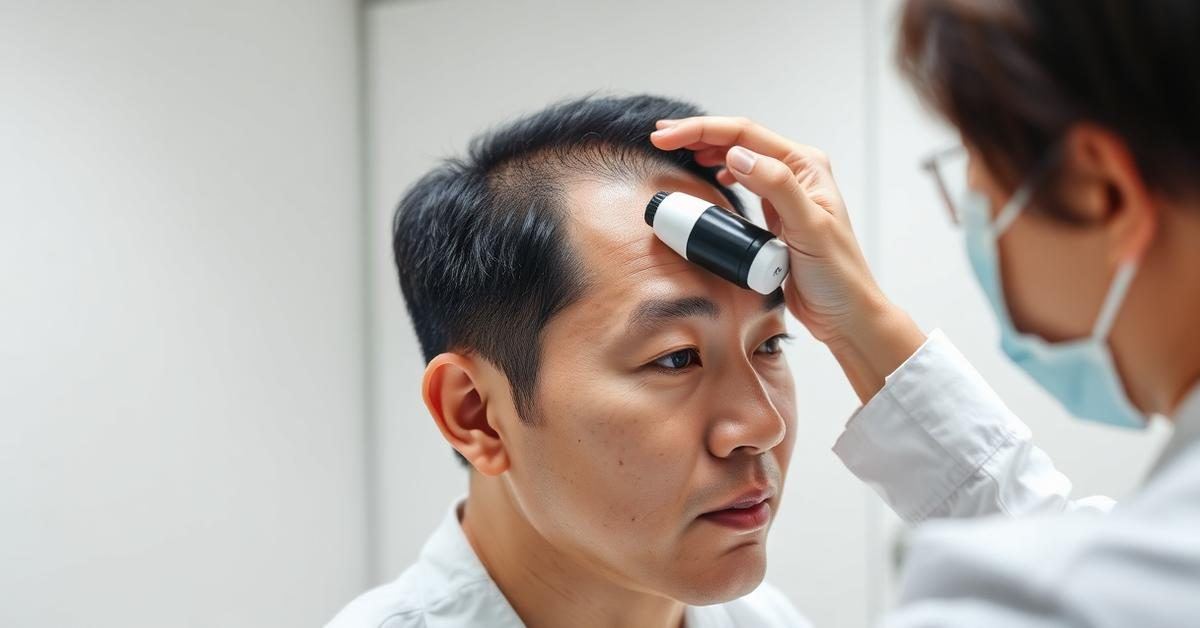
Stem cells for hair loss: the SVF scalp programme at Cheongdam The Cell
The 2021 SVF hair-loss study and how it fits with existing medication
Quick answer
The SVF scalp programme injects autologous adipose cells into the scalp to improve perifollicular circulation, reduce inflammation and extend the growth phase. The centre's medical director published SVF hair-loss research in Stem Cell Research & Therapy in 2021. Responders are typically early-to-moderate thinning with follicles still present — not fully bald areas.
Key facts
Published study
Stem Cell Research & Therapy (2021)
Best responders
Early to moderate thinning
Mechanism
Perfusion + anti-inflammatory
Assessment
Fixed-point photos + trichoscopy
Caution
Do not stop existing medication
Follicles and perifollicular perfusion
Follicles need steady perfusion to stay in anagen. In pattern hair loss the perifollicular capillary bed shrinks and low-grade inflammation sets in, so delivering cells that secrete angiogenic factors targets the follicular environment rather than replacing dead follicles.
An add-on, not a drug replacement
The sensible plan treats cell therapy as an add-on, not a substitute for proven drugs. Men on finasteride or minoxidil should not stop them to 'test' the cells: stopping typically loses maintained hair within months and makes the cell effect impossible to judge.
Measuring with photos and trichoscopy
Measure with methods you can audit: fixed-point photography at the same distance and lighting every three months, plus trichoscopy for hairs per square centimetre and the proportion of miniaturised hairs. Those numbers beat the impression of 'less shedding'.
Planning for travelling Thai patients
Thai patients travelling to Korea should ask in advance how many sessions the programme includes, whether repeat visits are expected, and what maintenance can be continued at home — long-term outcome depends on follow-through as much as on the procedure.
Frequently asked questions
Can it replace a hair transplant?▾
Not where follicles are gone. Cell therapy supports surviving follicles; truly bald areas still require transplantation.
Is it suitable for female pattern thinning?▾
Yes, but screen for contributors first — low ferritin, thyroid disease or hormonal issues — since correcting the cause usually yields more than any procedure.
Last updated: 2026-08-28 · This content is for information only and is not medical advice. Consult a qualified doctor before making treatment decisions.