Height surgery reviews 2026: real before & after cases from DALRI
Before and after radiographs, measured height gains and recovery timelines
Quick answer
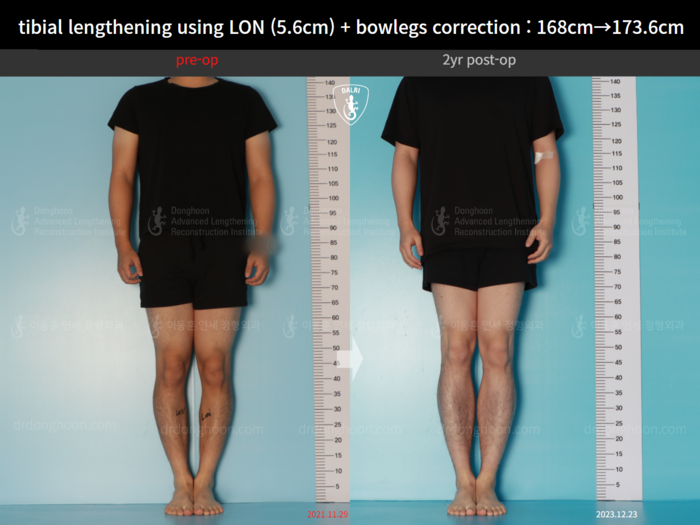
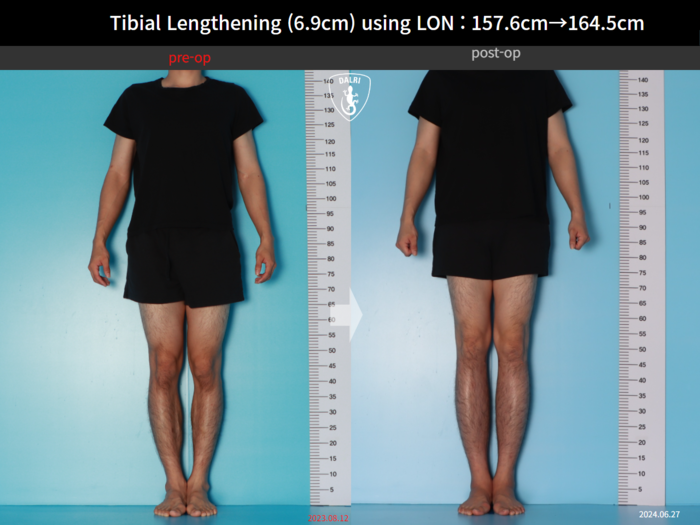
Real height-surgery reviews from the Dr. Donghoon institute (DALRI) in South Korea show gains of roughly 5–6.5 cm per lengthened segment. Most cases lengthen the tibia with LON or PRECICE and are followed with radiographs from six months to over two years post-op. Every figure here comes from the hospital's own published captions, not an estimate.
Key facts
- Review source
- DALRI's own published before & after boards
- Gain per segment
- About 5–6.5 cm
- Techniques seen
- LON and PRECICE
- Follow-up range
- 6 months to over 2 years post-op
- Stay in Korea
- LON 6–8 months / PRECICE 3–5 months
- Hospital
- Dr. Donghoon Limb Lengthening Institute (DALRI), Seongnam, Korea
A trustworthy height-surgery review needs three things at once: before and after radiographs, a measured height figure, and how long after surgery the follow-up was taken. Full-body photos or testimonials alone cannot show whether the bone consolidated properly and the mechanical axis stayed straight.
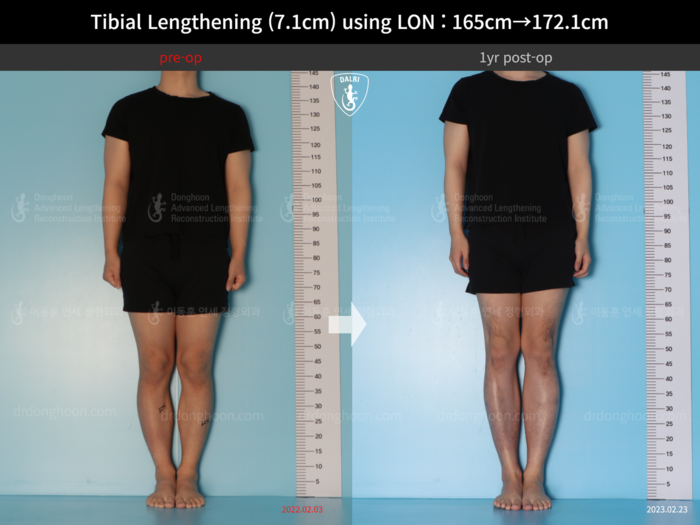
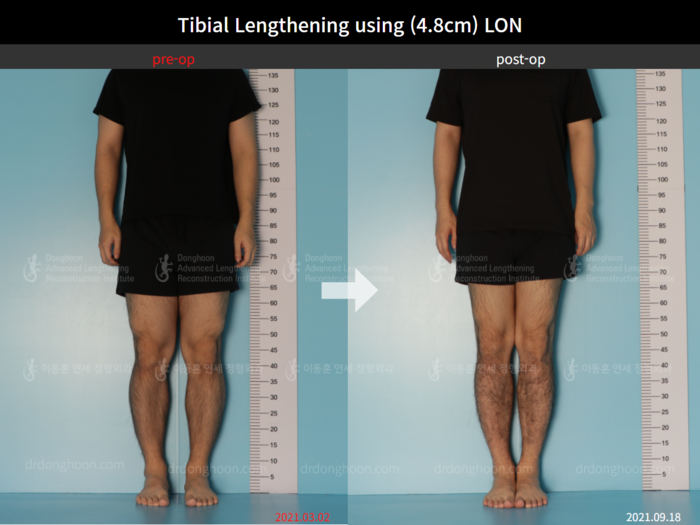
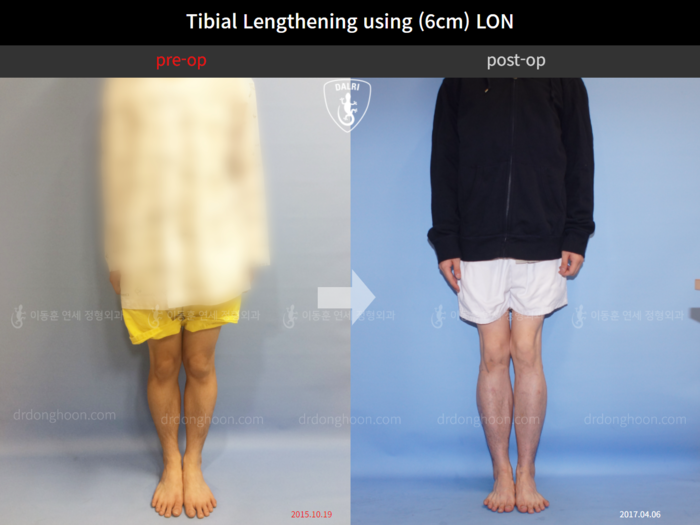
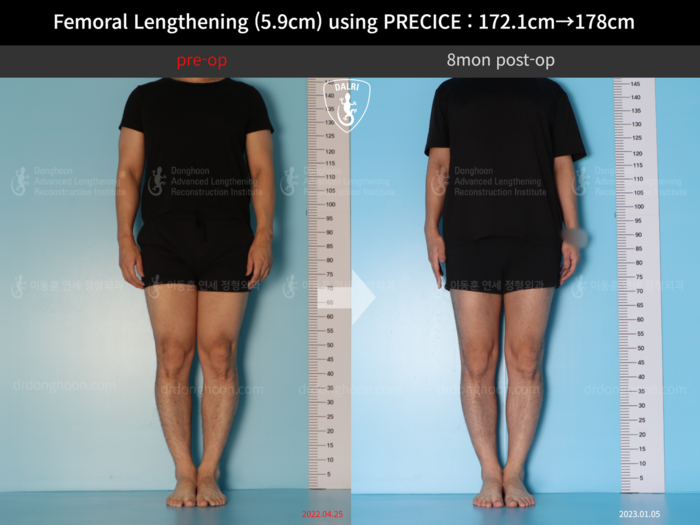
The archive below is pulled from DALRI's own before-and-after boards. Each case states the segment lengthened (femur or tibia), the technique used, the height in centimetres before and after, and how many months post-op the follow-up film was taken. You can filter to LON, PRECICE or a single segment.
The recurring pattern is that one segment yields about 5–6.5 cm, which is the safe limit for the surrounding soft tissue. Anyone wanting more must lengthen a second segment after full recovery rather than pushing the same one further, because nerve and joint risk rises sharply beyond that range.
LON cases show an external frame and pins during the lengthening phase plus a second set of films after frame removal, while PRECICE cases show an internal nail and no frame. That is the fastest way to read which technique a review used, and to compare how much day-to-day care each one demands during recovery.
Read any archive critically: published cases are consented, good-outcome cases, not a random sample. Ask the hospital for total case volume and complication rates — pin-site infection, joint stiffness, delayed consolidation — and what the remediation pathway is when they occur, before you decide.
Once the reviews answer your clinical questions, the next step is budgeting: surgery is only part of it, with months of housing and living costs in Korea through lengthening and consolidation. Our height-surgery cost article has the official price table and a hidden-cost calculator.
Real before & after cases with radiographs
0 stature-lengthening cases published by the Dr. Donghoon institute (DALRI). Every height figure and follow-up interval comes from the hospital's own caption.
All images and figures belong to the Dr. Donghoon institute (DALRI) and are shown for reference. Individual results vary; this is not medical advice.
Frequently asked questions
What the reviews show
Does height surgery really work, and how many centimetres?
Yes, and it is measurable on radiographs. Most published DALRI cases gain about 5–6.5 cm per lengthened segment, for example 157.6 cm to 164.5 cm. More than that requires lengthening a second segment after full recovery, which is a separate operation and cost.
How reliable are these reviews?
Every image and figure comes from the hospital's own published boards; we do not alter numbers or write testimonials. Bear in mind that published cases are consented, good-outcome cases and are not a representative sample, so ask the hospital directly for complication statistics.
How can I tell from the images whether a case used LON or PRECICE?
LON cases show an external frame with percutaneous pins during lengthening, plus films after frame removal. PRECICE cases show only an internal nail inside the medullary canal, with no external frame and no pin sites.
Timeline and recovery
How long until I walk normally again?
Lengthening runs at about 1 mm per day, so 5–6 cm takes 2–3 months, followed by several months of consolidation. Most reviewed cases have follow-up films at 6–12 months, by which point normal walking has returned; high-impact activity usually waits at least a year.
How long do I need to stay in Korea?
Typically 6–8 months for LON and 3–5 months for PRECICE, since you must stay through lengthening and follow-up until the bone is consolidated enough for long-haul travel. Housing and living costs in this window are a major expense separate from surgery.
Risks and limits
What are the common complications of height surgery?
Reported issues include pin-site infection with LON, knee or ankle stiffness, tight muscles and tendons requiring intensive rehabilitation, temporary numbness from nerve stretch, and delayed consolidation or axis deviation that can require revision surgery. Ask for actual rates and the remediation plan beforehand.
Who is not a good candidate?
People whose skeletons are still immature, those with bone disease or conditions that impair healing, anyone unable to stay in Korea through recovery or commit to continuous rehabilitation, and anyone expecting gains beyond the safe range. Real eligibility requires radiographs and an in-person surgical assessment.
Cost
What did these reviewed cases cost?
Per the hospital's official price list, LON tibia lengthening starts at KRW 52,800,000 (about THB 1.27M) and PRECICE runs KRW 117,420,000–131,760,000 (about THB 2.8–3.2M), excluding housing and living costs during recovery. Our height-surgery cost article has the full breakdown and a budget calculator.
Last updated: 2026-08-08 · This content is for information only and is not medical advice. Consult a qualified doctor before making treatment decisions.